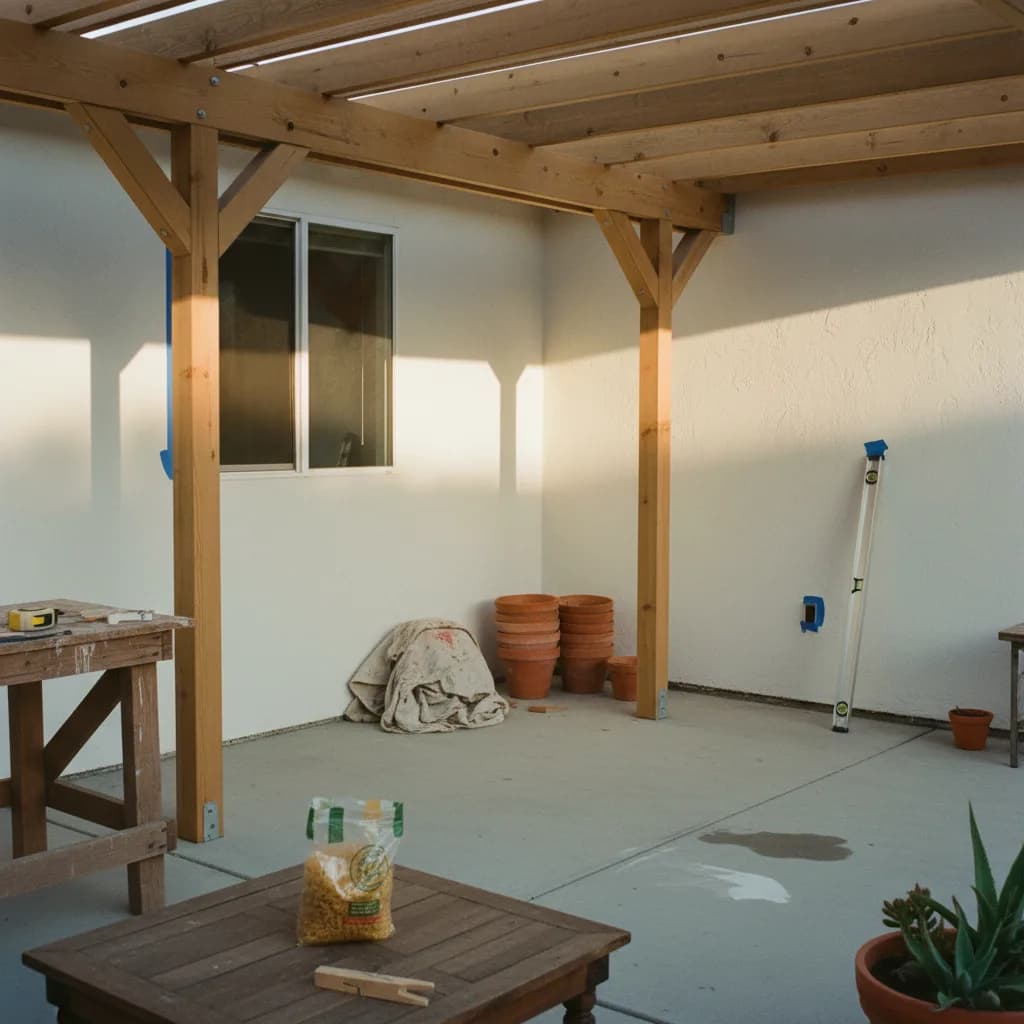
A $25,000 pergola quote in Long Beach often becomes a $38,000 final bill, adding four to six weeks of delays. The sticker price for the structure is just the starting point. The real costs hide in the ground, the electrical panel, and the salty coastal air. Homeowners get sold on the shade, but they get surprised by the engineering, utilities, and site-specific upgrades that a pergola contractor in Long Beach must include to build to code and withstand the elements.
In a Nutshell
The most common pergola budget overruns in Long Beach stem from under-engineered foundations, insufficient utility planning, and material specs that ignore the coastal environment. The average project we see runs over budget by 25% to 40% due to late-stage changes for structural or utility requirements. The National Association of Home Builders recommends a ten to fifteen percent contingency on renovations, but for complex outdoor structures, we suggest planning for twenty percent.
- The Cost-of-Mistake Pattern: A simple footing adjustment discovered during inspection can halt a project for weeks and add $5,000 in engineering and labor costs.
- Three Most Common Mistakes: 1. Ignoring soil reports and under-specifying footings. 2. Choosing materials and hardware not rated for salt air. 3. Scoping electrical and gas lines after the design is finalized.
- Your Counter-Move This Week: Before you solicit bids, call the City of Long Beach Development Services and ask a planner two questions: "What are the footing depth requirements for a detached pergola in my neighborhood?" and "What are the permit triggers for size, electrical, and plumbing?"
Mistake #1: Underestimating Footing and Foundation Costs
Homeowners see a quote for four concrete footings and assume it's standard. They're wrong because Long Beach isn't standard. Much of the city, especially areas like Naples and Belmont Shore, has sandy soil or is in a seismic liquefaction zone, requiring deeper, more solid foundations than inland projects. A contractor who quotes standard 18-inch-deep footings without a soil report is setting you up for a costly change order when an inspector requires 36-inch or even 48-inch caissons. The fix is to demand that footing depth and rebar specifications are explicitly defined in the initial contract, contingent on a soils report if required by the city. A typical pergola project cost in Long Beach for 2026 is between $22,000 and $55,000. These figures represent a typical detached structure on a level lot; costs can start lower for simpler kits or attached patio covers on existing concrete slabs. The higher costs are driven by labor rates, which the California Department of Industrial Relations prevailing wage data for Los Angeles County shows are among the highest in the state.
Mistake #2: Ignoring Coastal Wind and Corrosion Engineering
A pergola built in Bixby Knolls faces different environmental stresses than one on the Alamitos Bay peninsula. Coastal Long Beach properties require engineering for 110 mph design wind speeds, which impacts everything from footing size to the hardware connecting beams. The second failure point is corrosion. Standard galvanized hardware will rust in a matter of months in the salt-heavy air. What to do instead? Insist on 316-grade stainless steel hardware, like Simpson Strong-Tie's Stainless-Steel line, for all connectors. For the structure itself, consider powder-coated aluminum or a high-end vinyl system over wood. While a Western Red Cedar pergola looks great initially, it requires annual sealing, and even then, its lifespan is shorter in a marine environment. The material upgrade adds 15-25% to the initial cost but eliminates thousands in long-term maintenance.
Mistake #3: Scoping Electrical and Gas as an Afterthought
Ready to compare vetted project options?
Use Project Match privately when your scope is clear enough for contractor conversations.
Start Project MatchYou want lights, a ceiling fan, and maybe a couple of outlets for charging devices. Later, you decide to add infrared heaters. This is a classic budget-breaker. Adding utilities after the fact is exponentially more expensive than planning for them upfront. The gas line upsize from 1/2 inch to 3/4 inch is rarely in the first quote; budget another $1,200 to $2,400 if your meter doesn't support the BTU load of heaters. Electrical work for a pergola often requires a new 20-amp circuit run from your main panel, and if your panel is full, a 60-amp subpanel adds another $2,200 to $3,500. The right way is to map out every desired utility from day one. Have the electrician and plumber consult on the plan before the first footing is dug. Trenching once is expensive; trenching twice is a financial disaster.
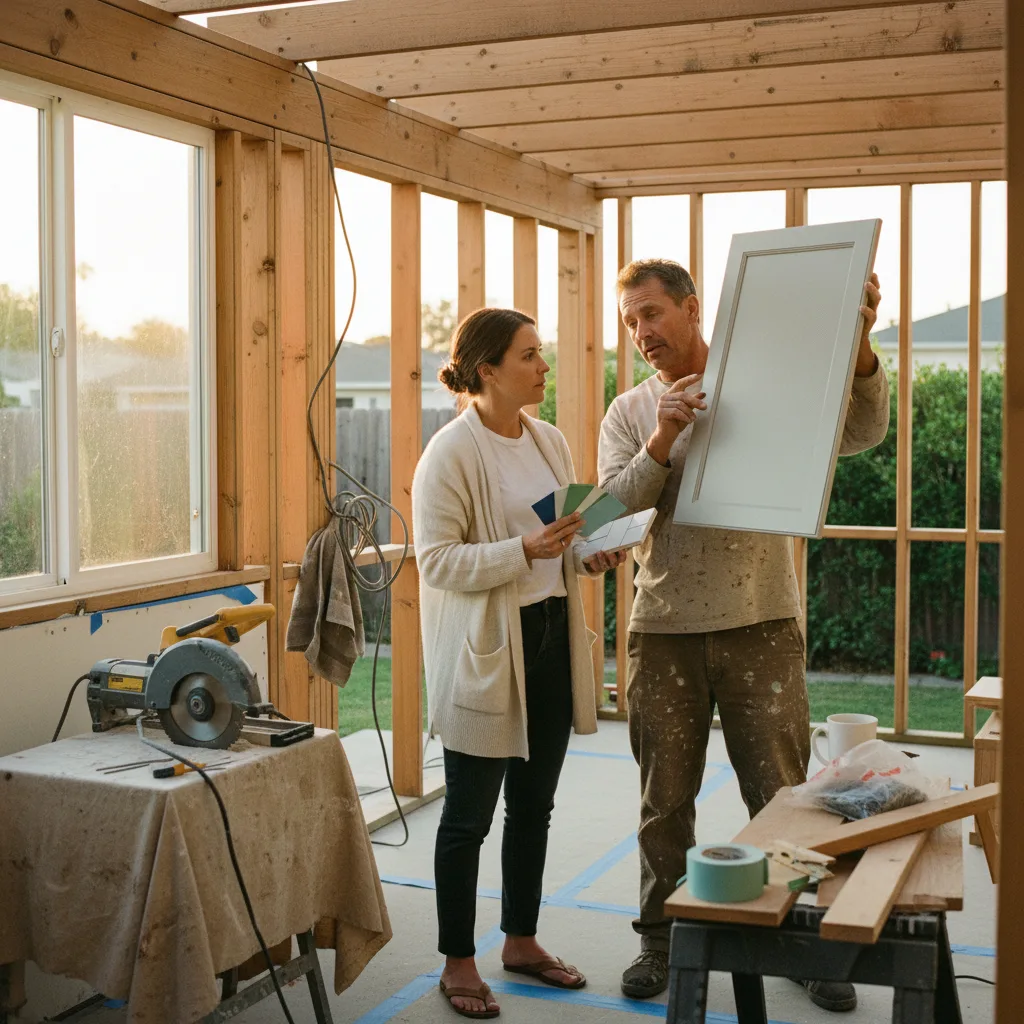
Mistake #4: Budgeting for the Structure, Not the 'Outdoor Room'
The pergola itself is just one line item. The project isn't finished until it's a usable living space. Homeowners fixate on the cost of the structure and forget to budget for what goes under and around it. The three-beat budget framing should look like this: the aluminum louvered pergola is $32,000. The paver patio base is another $14,000. The furniture, lighting, and landscaping add $11,000. Many projects also trigger compliance with the Model Water Efficient Landscape Ordinance (MWELO). If your project disturbs enough ground, you may need a hydrozone breakdown by sun exposure and a specified drought-tolerant plant palette. Budgeting for Polywood Adirondacks, a Lynx 36-inch Sedona built-in grill, and low-water plantings from the start gives you a true project cost, not just a structure cost.
Mistake #5: Misunderstanding Permit Triggers in Long Beach
"It's under 120 square feet, so I don't need a permit." This is a dangerously common oversimplification. In Long Beach, while simple, detached accessory structures under 120 square feet may be exempt, this exemption vanishes the moment you add electrical wiring, a gas line, or attach the structure to your house. Attaching to the house ledger board requires structural engineering and a full plan review to ensure it's properly flashed and supported. A reliable pergola contractor in Long Beach will know this. Before you sign anything, get clarity on the full scope and how it impacts the permit. Get three quotes. Check three references. Visit one finished Long Beach job before signing. For a detailed guide, review Long Beach's specific permit requirements in our guide: [Long Beach Pergola Permit Playbook 2026](/guides/long-beach-pergola-permit-playbook-2026).
Mistake #6: Accepting a Vague, Lump-Sum Quote
A one-page quote with a single number is a recipe for conflict. It allows a contractor to substitute cheaper materials or cut corners on labor without you knowing until it's too late. A professional bid is detailed and transparent. It breaks down costs for demolition, site prep, footings (specifying depth and concrete PSI), the specific brand and model of the pergola (e.g., "StruXure Pivot 6 XL"), hardware type (e.g., "316 Stainless Steel"), labor, and separate allowances for electrical and plumbing. This protects you from price creep and ensures you're comparing apples to apples between bids. If a contractor resists providing a detailed breakdown, it's a major red flag.
Representative Pergola Projects from 2026
Three representative projects from 2026, scoped similarly, reconstructed from Golden Yards Magazine's Project of the Day network and used here in aggregate form:
- Belmont Shore - $58,000: A 14'x18' attached powder-coated aluminum pergola with an automated louvered roof. Project included engineered ledger connection, new concrete slab with footings, a 60-amp subpanel for lighting, two ceiling fans, and four infrared heaters. Required full structural plans and city permits.
- Bixby Knolls - $34,000: A 12'x16' freestanding Western Red Cedar pergola on a new paver patio. Included standard footings, one electrical circuit for string lights and two outlets. Permitted as a detached accessory structure.
- Naples Island - $72,000: A custom 16'x22' Ipe wood and steel-frame pergola. Required deep-drilled caisson footings due to soil conditions, extensive 316 stainless steel hardware, a gas line for a fire pit, and a full MWELO-compliant landscape plan for the surrounding yard.
Sources & Methodology
See the Golden Yards Methodology for how sources are reviewed, ranges are normalized, and planning-data limits are handled.
Cost ranges in this guide draw on the following named industry sources, public agency datasets, and Golden Yards Magazine editorial research.
- City of Long Beach Development Services, Permitting Division (2026)
- California Building Standards Code (Title 24), Part 2: California Building Code (2022 Edition)
- National Association of Home Builders (NAHB) Remodeling Market Index (Q1 2026)
- California Department of Industrial Relations, Prevailing Wage Determinations (Los Angeles County) (2026)
- Simpson Strong-Tie, 'Corrosion Information for Coastal Areas' (2025)
- California Model Water Efficient Landscape Ordinance (MWELO) (2024 Update)
Golden Yards Magazine Take
The meta-mistake homeowners make with a pergola project is treating it like a piece of furniture instead of a small-scale construction project. You wouldn't build a room addition without an architect, a detailed plan, and clear utility specifications, yet many approach a complex, $50,000 automated pergola with less diligence. The structure is not the project. The project is the creation of a safe, functional, and durable outdoor room. This requires thinking from the ground up: soil, foundation, drainage, utilities, structure, and finally, finishes. When you shift your mindset from buying a product to managing a construction project, you instinctively start asking the right questions about engineering, permits, and line-item costs, which is the only way to keep a Long Beach pergola project on budget.
Ready to start your pergola project?
Find My ProsFrequently Asked Questions
What's the most expensive mistake when building a pergola in Long Beach?
The costliest error is improper footings. If they are too shallow or not engineered for Long Beach's sandy soil and seismic conditions, the entire structure can be deemed unsafe. This often requires a complete tear-down and rebuild of the foundation, easily costing $10,000 to $15,000 and wiping out the original investment. This mistake happens when contractors apply inland building standards to a coastal environment. An inspector flagging inadequate footings mid-project triggers a work stoppage. You'll then have to hire a structural engineer to create a remediation plan, which involves new plans, new permits, demolition of the faulty work, and pouring much deeper, more heavily reinforced concrete footings. It's a financial and scheduling catastrophe that is entirely avoidable with proper planning.
How do I know if my pergola contractor is padding the quote?
A padded quote often hides behind vague, lump-sum categories like "Site Prep" or "Materials" without itemization. Reputable contractors provide a detailed breakdown of costs for labor, specific materials by brand (e.g., "Simpson Strong-Tie connectors"), equipment, and permits. Large, unexplained "contingency" or "miscellaneous" fees are also a red flag. A professional quote should read like a recipe, listing every ingredient. Ask for specifics: What brand of aluminum is being used? What is the gauge? What grade of stainless steel for the hardware? If the contractor is evasive or says "it's all-inclusive," they may be creating room to use cheaper materials to increase their profit margin. A transparent contractor is confident in their pricing and sourcing.
When should I walk away from a pergola quote in Long Beach?
Walk away immediately if the contractor is not licensed with the CSLB (California Contractors State License Board), cannot provide proof of liability and workers' compensation insurance, or pressures you to sign a contract on the spot. Also, reject any quote that suggests skipping permits for work that clearly requires them, as the liability will ultimately fall on you. Other serious warning signs include a demand for a large upfront deposit (in California, it's illegal to ask for more than 10% or $1,000, whichever is less), a non-professional email address, or an unwillingness to provide at least three recent local references. Your home is a major asset; only work with verified, professional, and insured contractors.
What's the fastest way to blow a pergola budget?
The quickest way to go over budget is scope creep, specifically adding high-cost utilities mid-project. Deciding you want integrated heaters, a ceiling fan, or a full outdoor kitchen connection after the initial plans are approved means re-permitting, trenching through finished landscaping, and significant electrical or gas line upgrades. These additions are not simple change orders. A gas line for heaters or a fire pit requires a separate permit, pressure testing, and inspection. Adding a ceiling fan might require a larger, engineered header beam to support the weight and motion. Planning every single desired function before the first drawing is finalized is the single best way to maintain budget discipline.