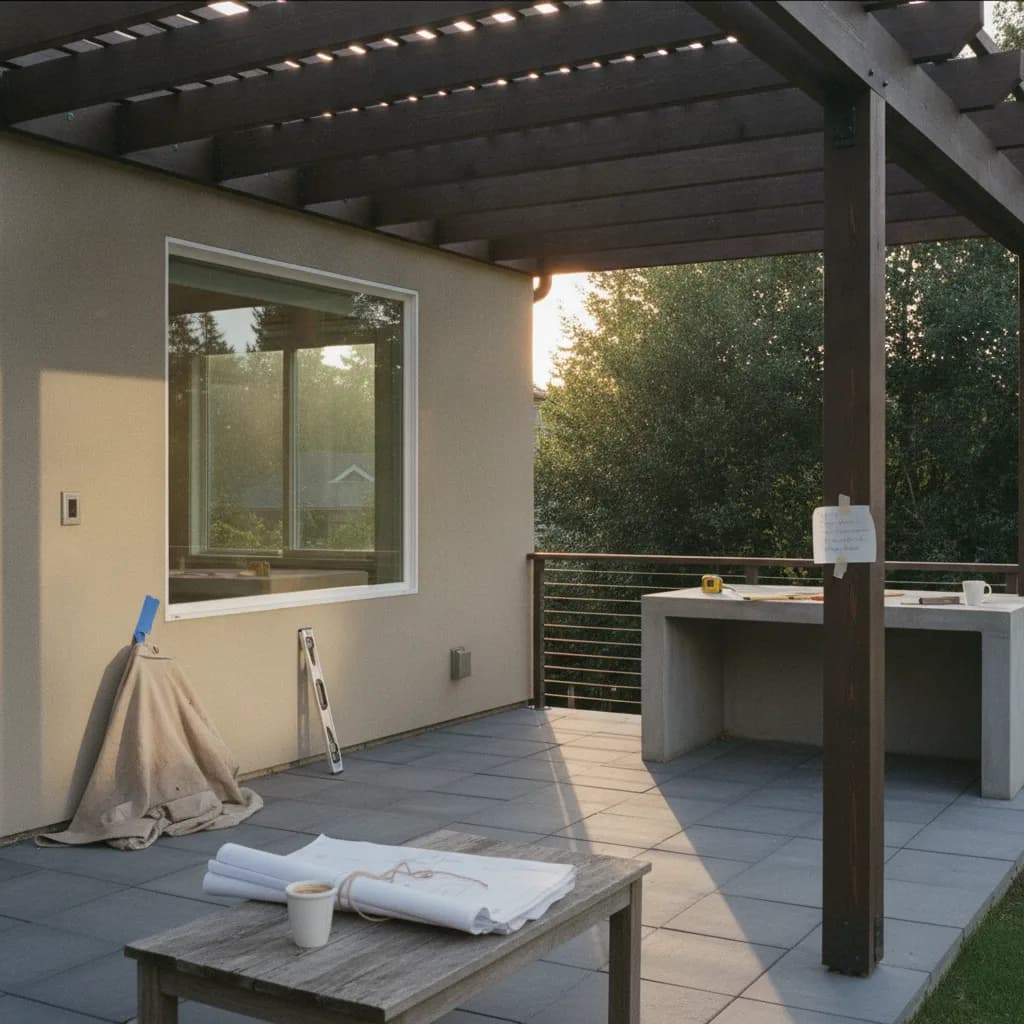
The backyard pergola is no longer a simple cedar frame for climbing roses. In Bellevue, the new standard is a four-season outdoor room, a fully-integrated extension of the home with a project budget to match. The average high-end pergola installation in 2026 now tops $85,000, a thirty percent increase in scope from just three years ago, replacing the basic open-rafter structures that once defined Pacific Northwest backyards.
In a Nutshell: The All-Weather Outdoor Room
- The Big Idea: Homeowners are ditching seasonal-use patios for permanent, all-weather outdoor living spaces that function as true extensions of the home.
- The Big Three Trends: Motorized louvered roofs for rain control, built-in infrared heating systems, and integrated privacy walls are now default features, not luxury add-ons.
- What’s Being Replaced: Basic cedar pergola kits, standalone propane heaters, and decorative latticework are fading in favor of more durable, functional, and integrated solutions.
- What’s Next: Full smart-home integration, allowing voice and app control over a pergola’s louvers, lighting, heaters, and even motorized screens, creating a smooth indoor-outdoor experience.
Trend 1: Louvered Roofs Are the New Standard, Not the Upgrade
The defining shift in the Bellevue pergola market is the move from fixed-roof or open-rafter designs to motorized, adjustable louvered systems. These roofs, offered by brands like StruXure and Azenco, can close watertight during a rain shower or open to let in the sun, dramatically extending the usability of the patio. A recent project we tracked in Medina saw the homeowner choose a StruXure Pivot 6 system over a traditional cedar and polycarbonate roof; the premium was only fifteen percent of the total project cost but tripled the number of days the space could be used. This isn't an upgrade anymore; for any serious pergola project in 2026, it's the expected starting point. Expect this trend to solidify as homeowners prioritize function over pure aesthetics.
Trend 2: Integrated Infrared Heaters Replace Mobile Propane Units
The cumbersome, space-hogging propane mushroom heater is officially obsolete in high-end projects. Instead, sleek, built-in electric infrared heaters are being specified directly into the pergola’s structure. Wall- or ceiling-mounted units from brands like Infratech or Bromic provide silent, efficient radiant heat at the flip of a switch. What homeowners often miss in the initial quote is the electrical scope required. A pair of 4,000-watt Infratech heaters requires a dedicated 240-volt, 40-amp circuit. For many older homes in West Bellevue, this means a new subpanel and trenching from the main service panel, a hidden cost of $3,500 to $6,000 that a pergola contractor Bellevue quotes might not include upfront.
Trend 3: Solid Walls and Privacy Screens Are In; Open Latticework Is Out
Ready to compare vetted project options?
Use Project Match privately when your scope is clear enough for contractor conversations.
Start Project MatchAs Bellevue lots get smaller and neighbors get closer, privacy and wind protection have become primary design drivers. The open, airy pergola is being replaced by structures with one or two solid or semi-solid walls. These aren't just decorative panels; they are structural elements designed to block wind and sightlines. We're seeing ipe hardwood slats, powder-coated aluminum panels, and even composite siding that matches the main house used to create these features. In neighborhoods like Clyde Hill and Somerset, these privacy walls are essential for creating a sense of enclosure and making the space comfortable on breezy evenings. The future of pergola design is less of a freestanding frame and more of a three-sided outdoor room.
Trend 4: Powder-Coated Aluminum Dethrones Cedar
The romance of Western Red Cedar is fading under the reality of Pacific Northwest weather. Maintenance fatigue is driving a decisive shift toward powder-coated extruded aluminum as the structural material of choice. While the upfront cost is higher, homeowners are choosing the longevity and near-zero maintenance of aluminum from manufacturers like Outdoor Elements or Equinox Louvered Roof. The most popular finishes for 2026 are textured black, dark bronze, and charcoal gray, mimicking the look of painted steel for a more modern aesthetic. Cedar requires annual cleaning and re-staining to prevent rot and graying in Bellevue's damp climate, an ongoing expense and chore that aluminum eliminates entirely.
Trend 5: Engineering for Wind and Snow Load Is Non-Negotiable
Gone are the days of over-the-counter pergola kits installed on a weekend. The City of Bellevue requires engineered plans for most substantial overhead structures, and contractors are building to stricter standards. While Bellevue isn't subject to coastal hurricane ratings, designs must account for significant wind gusts and potential snow accumulation. This means larger, deeper concrete footings and more solid connection hardware. A pergola contractor in Bellevue will now routinely include a line item for structural engineering, typically adding $2,000 to $4,500 for stamped plans. This is a critical, non-negotiable cost for safety and permitting that surprises homeowners accustomed to simpler deck projects.
Trend 6: The Outdoor Kitchen Is Merging With the Pergola
The standalone BBQ island is being absorbed into the pergola structure itself. Rather than a separate masonry island, designers are integrating countertops, sinks, and built-in grills like the Lynx 36-inch Sedona directly between the pergola's support posts. This creates a more cohesive, functional layout, but it dramatically increases complexity. It requires coordinating multiple trades: a plumber for water and drain lines, an electrician for outlets and appliance hookups, and a gas fitter for the grill. The gas line is a frequent source of budget overruns; upsizing the line from the meter to support the BTU load of a high-end grill and a fire pit can add another $2,500 to $5,000, a cost rarely captured in the initial pergola quote.
Trend 7: Smart Control Is the Default for High-End Projects
If a system can be motorized, it will be automated. High-end pergola bellevue projects in 2026 feature integrated smart home controls as a default. Systems from Somfy or custom Control4 programming allow homeowners to operate the louvered roof, dim the LED lighting, activate heaters, and lower motorized screens from a single smartphone app or wall-mounted keypad. Some systems even incorporate rain and wind sensors that automatically close the roof when bad weather is detected. This level of automation adds a five to ten percent premium to the project cost but is considered essential for convenience and functionality by clients investing in a four-season space.
Trend 8: The Budget Breakdown Is Shifting from Structure to Systems
The biggest change in pergola bellevue cost is the budget allocation. Five years ago, the structure itself (posts, beams, rafters) accounted for eighty percent of the cost. Today, it’s closer to fifty percent. The other half is now dedicated to systems: electrical, gas, plumbing, automation, and integrated components. A typical high-end project budget breaks down this way: the aluminum louvered structure is $42,000. The integrated Infratech heaters and LED lighting package adds $11,000. The new 60-amp electrical subpanel and trenching is another $7,500. This shift requires a different mindset; homeowners are not just buying a structure, but a complex, multi-trade system. The National Association of Home Builders recommends a ten to fifteen percent contingency on renovations in homes over thirty years old.
Why Is a Pergola So Expensive in Bellevue?
The sticker shock for a modern pergola is real, driven by three key factors: materials, systems, and labor. The shift from wood to engineered aluminum and automated systems has fundamentally increased the base material cost. But labor is the most significant local driver. According to the Washington State L&I contractor licensing and labor rate data, skilled tradespeople, particularly licensed electricians and gas fitters, command premium wages in the Seattle metro area., general liability and insurance costs for contractors working on high-value homes in areas like Medina add overhead that is passed on to the consumer. For a detailed guide on navigating the approval process, see our Bellevue pergola permit playbook for 2026.
Three Sample Pergola Budgets in Bellevue for 2026
To understand the real-world pergola bellevue cost, it’s best to look at complete project scopes. While costs can start lower for simple, non-louvered structures attached to smaller homes or townhouses, most detached-home projects fall into these ranges. Three representative projects from 2026, scoped similarly, reconstructed from Golden Yards Magazine's Project of the Day network and used here in aggregate form:
- The Somerset Entertainer ($68,000): A 16x18 foot attached aluminum pergola with a manually operated louvered roof. This project included a full LED lighting package but no integrated heaters. The budget included a new concrete patio slab and a small gas line extension for a freestanding fire pit. Electrical was a simple connection to an existing outdoor circuit.
- The Clyde Hill Family Hub ($92,000): A 20x20 foot freestanding StruXure Pivot 6 pergola with a motorized louvered roof and a single privacy wall with ipe slats. It featured two 4,000-watt Infratech heaters, full smart-home integration for lights and roof, and required a new 60-amp electrical subpanel. The project also included engineering plans and permitting fees.
- The Medina All-Season Pavilion ($145,000+): A 24x22 foot custom structure fully integrated with an outdoor kitchen. This included a top-tier Azenco R-BLADE motorized roof, four Bromic heaters, motorized privacy screens on two sides, and a built-in kitchen with a Lynx grill and refrigerator. The scope included extensive trenching for a new gas line, water supply, drainage, and a 100-amp subpanel.
Sources & Methodology
See the Golden Yards Methodology for how sources are reviewed, ranges are normalized, and planning-data limits are handled.
Cost ranges in this guide draw on the following named industry sources, public agency datasets, and Golden Yards Magazine editorial research.
- North American Deck and Railing Association (NADRA), Market Report (2026)
- Washington State L&I contractor licensing and labor rate data (2026)
- StruXure Pergola Systems, 2026 Dealer Catalog (2026)
- City of Bellevue, Development Services Department, Permit Data (2025)
- 2026 Pacific Northwest Builders' Show Report (2026)
- Golden Yards Magazine, Editorial Project Cost Database (2025-2026)
Golden Yards Magazine Take
The evolution of the Bellevue pergola is a direct response to the Pacific Northwest climate and the region's high property values. This isn't about creating shade from relentless sun, as it is in Southern California. It's about rain control and temperature management to maximize the utility of outdoor space year-round. Homeowners are making a calculated investment to expand their living footprint without a formal addition. The high cost reflects a fundamental change in purpose: from a decorative garden feature to a high-performance, system-rich outdoor room. The new pergola is less about landscape architecture and more about mechanical engineering, a permanent and valuable extension of the home itself.
Frequently Asked Questions
How much does a pergola cost in Bellevue in 2026?
A professionally installed, modern pergola in Bellevue typically costs between $65,000 and $120,000. This price reflects the 2026 trend toward motorized louvered aluminum structures with integrated systems like heating and lighting. Simpler, fixed-roof cedar pergolas can start lower, but are becoming less common for primary residences.
The final pergola bellevue cost depends heavily on the systems you add. A basic 16x16 foot aluminum louvered structure might cost $35,000-$45,000. Adding integrated infrared heaters can add $8,000-$12,000 (including the necessary electrical subpanel upgrade). A built-in outdoor kitchen can add another $20,000-$50,000 depending on appliances and utility runs. Always budget for engineering plans ($2,000-$4,500) and permitting fees.
Do I need a permit for a pergola in Bellevue?
Yes, in most cases you will need a permit for a new pergola in Bellevue. The city generally requires a construction permit for any detached accessory structure larger than 200 square feet. Because modern pergolas often include electrical and gas lines, permits are almost always required regardless of size to ensure safety and code compliance.
The permitting process involves submitting detailed plans, including structural engineering calculations for wind and snow loads. If you are in a critical area, like a steep slope or shoreline, additional reviews will be necessary. Working with an experienced pergola contractor in Bellevue is critical, as they will manage the submission and inspection process with the Bellevue Development Services Department.
What is the difference between an aluminum and a wood pergola?
The primary difference is maintenance and integrated functionality. Aluminum pergolas, typically powder-coated, offer superior durability in Bellevue's wet climate and require virtually no upkeep. They are also engineered to seamlessly incorporate motorized louvered roofs, hidden gutters, and integrated lighting channels. Wood, usually cedar, provides a classic aesthetic but demands regular cleaning and staining to prevent rot and discoloration.
While cedar has a lower upfront material cost, the long-term maintenance expense can be significant. Aluminum's higher initial investment is often justified by its longevity and compatibility with the complex systems that define a modern pergola. For a four-season outdoor room, aluminum is the overwhelmingly preferred material in 2026.
How long does it take to build a custom pergola?
A custom pergola project in Bellevue typically takes three to six months from initial design to final completion. This timeline can be broken down into distinct phases. The design and engineering phase usually takes four to six weeks. Securing a permit from the city of Bellevue can take another six to ten weeks, depending on their workload and the project's complexity.
Once permits are issued, fabrication of a custom aluminum structure can take four to eight weeks. The on-site work, including footings, erection, and utility hookups, is often the fastest part, typically taking two to three weeks. Delays are most common during the permitting and material fabrication stages, so it's wise to begin planning well in advance of the season you hope to use the space.
Ready to start your pergola project?
Find My ProsFrequently Asked Questions
How much does a pergola cost in Bellevue in 2026?
A professionally installed, modern pergola in Bellevue typically costs between $65,000 and $120,000. This price reflects the 2026 trend toward motorized louvered aluminum structures with integrated systems like heating and lighting. Simpler, fixed-roof cedar pergolas can start lower, but are becoming less common for primary residences. The final pergola bellevue cost depends heavily on the systems you add. A basic 16x16 foot aluminum louvered structure might cost $35,000-$45,000. Adding integrated infrared heaters can add $8,000-$12,000 (including the necessary electrical subpanel upgrade). A built-in outdoor kitchen can add another $20,000-$50,000 depending on appliances and utility runs. Always budget for engineering plans ($2,000-$4,500) and permitting fees.
Do I need a permit for a pergola in Bellevue?
Yes, in most cases you will need a permit for a new pergola in Bellevue. The city generally requires a construction permit for any detached accessory structure larger than 200 square feet. Because modern pergolas often include electrical and gas lines, permits are almost always required regardless of size to ensure safety and code compliance. The permitting process involves submitting detailed plans, including structural engineering calculations for wind and snow loads. If you are in a critical area, like a steep slope or shoreline, additional reviews will be necessary. Working with an experienced pergola contractor in Bellevue is critical, as they will manage the submission and inspection process with the Bellevue Development Services Department.
What is the difference between an aluminum and a wood pergola?
The primary difference is maintenance and integrated functionality. Aluminum pergolas, typically powder-coated, offer superior durability in Bellevue's wet climate and require virtually no upkeep. They are also engineered to seamlessly incorporate motorized louvered roofs, hidden gutters, and integrated lighting channels. Wood, usually cedar, provides a classic aesthetic but demands regular cleaning and staining to prevent rot and discoloration. While cedar has a lower upfront material cost, the long-term maintenance expense can be significant. Aluminum's higher initial investment is often justified by its longevity and compatibility with the complex systems that define a modern pergola. For a four-season outdoor room, aluminum is the overwhelmingly preferred material in 2026.
How long does it take to build a custom pergola?
A custom pergola project in Bellevue typically takes three to six months from initial design to final completion. This timeline can be broken down into distinct phases. The design and engineering phase usually takes four to six weeks. Securing a permit from the city of Bellevue can take another six to ten weeks, depending on their workload and the project's complexity. Once permits are issued, fabrication of a custom aluminum structure can take four to eight weeks. The on-site work, including footings, erection, and utility hookups, is often the fastest part, typically taking two to three weeks. Delays are most common during the permitting and material fabrication stages, so it's wise to begin planning well in advance of the season you hope to use the space.