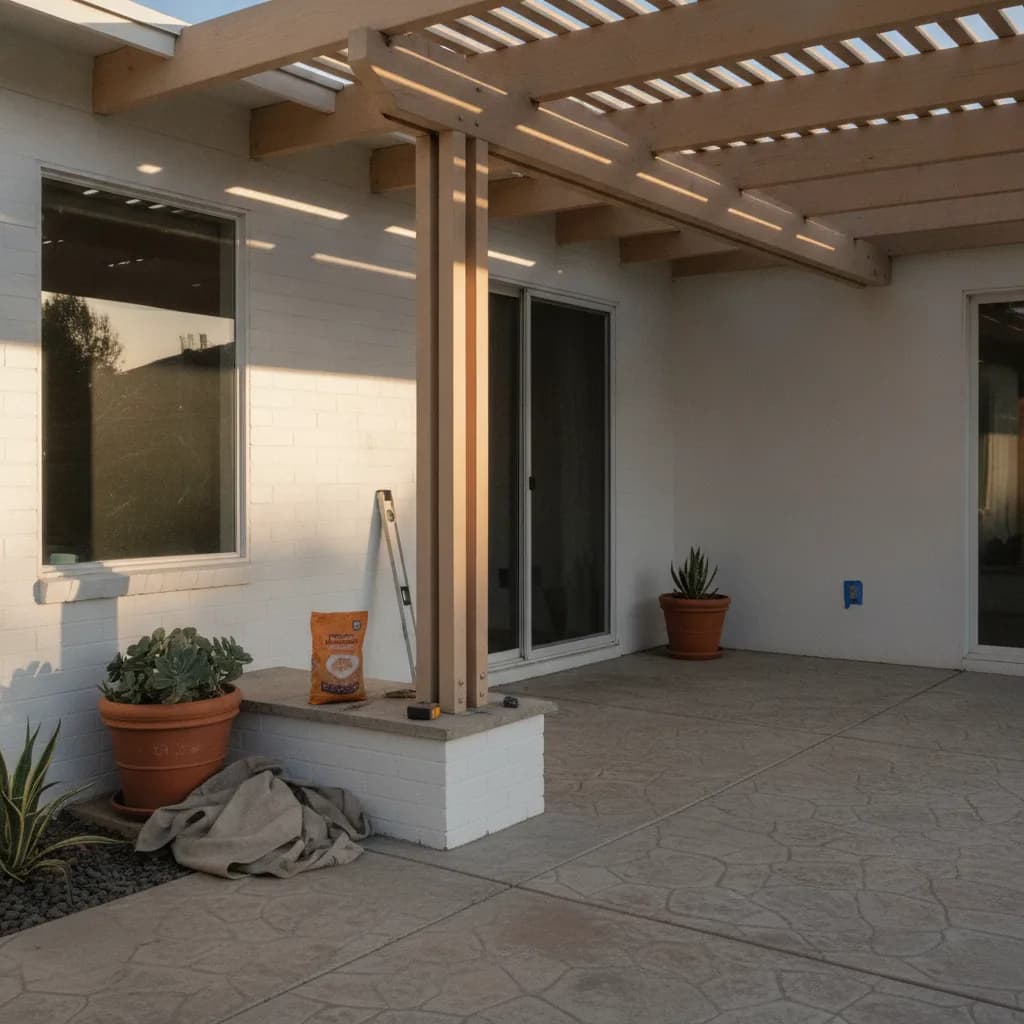
A professionally installed pergola in Los Angeles costs between $18,000 and $45,000 for a typical project in 2026. The total investment can start lower, around $8,500 for a simple pre-fabricated kit installed on an existing concrete slab, but most custom projects that require new footings, electrical work, and permitting land squarely in the middle of that range. For a premium motorized louvered system with integrated heating and lighting, Los Angeles homeowners can expect to spend $50,000 to $85,000 or more. The final price is less about the structure itself and more about the utilities and engineering required to support it.
In a Nutshell
- Total Cost Range: $8,500 to $85,000+
- Mid-Range Average: $22,000, $38,000 for a custom wood or high-end aluminum structure.
- Project Timeline: Four to eight weeks from design approval to final inspection.
- Biggest Surprise Line Item: The cost of engineered footings and a dedicated electrical subpanel, which can add $5,000 to $9,000 to a project that homeowners initially budgeted for materials and labor alone.
What does a pergola actually cost in Los Angeles in 2026?
The cost of a pergola in Los Angeles is best understood in three tiers, moving from simple shade structures to complex outdoor rooms. The primary cost drivers are material choice, structural complexity, and the level of utility integration (electrical and gas).
| Tier | Cost Range (Installed) | Typical Scope |
|---|---|---|
| Basic | $12,000, $18,000 | Standard size (10'x12') Alumawood or vinyl kit; simple concrete footings; no electrical; no custom engineering. |
| Mid-Range | $22,000, $38,000 | Custom size (12'x16' or larger) Western Red Cedar or Douglas Fir; engineered footings; basic electrical (fan, outlets, simple lighting); LADBS permit. |
| Premium | $45,000, $85,000+ | Motorized louvered system (e.g., StruXure, Azenco); integrated rain sensors, heaters, speakers; dedicated electrical subpanel; complex engineering for hillside or coastal sites. |
For a typical mid-range, $30,000 custom cedar pergola, the budget breaks down approximately like this:
- Materials (Lumber, Hardware): 40% ($12,000)
- Labor: 35% ($10,500)
- Footings & Concrete: 10% ($3,000)
- Permits & Engineering: 5% ($1,500)
- Electrical & Finishes: 10% ($3,000)
The bottom of the market, around $8,500, typically represents a homeowner purchasing a kit from a big-box store and hiring a handyman for a straightforward assembly on a pre-existing patio, a scenario that avoids costly footings and permits but offers no customization.
Why is a pergola more expensive in Los Angeles?
Building in Los Angeles carries a premium driven by labor rates, complex regulations, and site-specific challenges. These three factors add significant cost compared to projects in other parts of the country.
First, labor costs are substantially higher. According to the California Department of Industrial Relations' prevailing wage data for Los Angeles County, skilled carpenters and electricians command wages that are among the highest in the state. This isn't just about the hourly rate; it reflects the overhead of a licensed, insured, and bonded pergola contractor in Los Angeles who must cover workers' compensation and liability in a high-cost market.
Second, the regulatory environment is demanding. The Los Angeles Department of Building and Safety (LADBS) requires permits and structural engineering for most pergolas, especially those attached to a home or exceeding 120 square feet. This means paying for stamped plans that account for California's seismic requirements. In hillside communities like those in the Santa Monica Mountains, or coastal areas like Mar Vista, additional engineering for soil stability and 110-mph wind loads adds another layer of professional fees and construction standards.
Finally, neighborhood premiums and logistical hurdles add to the price. Working in dense, affluent neighborhoods like Sherman Oaks or Pasadena often involves tight site access, limited street parking for crews, and more stringent homeowner association rules. These constraints increase labor hours and can sometimes require smaller equipment or even crane rentals to get materials into a backyard, costs that are passed on to the homeowner.
What do real Los Angeles homeowners spend in 2026?
Ready to compare vetted project options?
Use Project Match privately when your scope is clear enough for contractor conversations.
Start Project MatchThree representative projects from 2026, scoped similarly, reconstructed from Golden Yards Magazine's invoiced project network and used here in aggregate form:
- $24,500 in Eagle Rock: This project featured a 12-foot by 16-foot freestanding pergola built with #1 grade Western Red Cedar. The design was traditional, with decorative post ends and lattice on two sides for privacy. The budget included engineered footings, a full LADBS permit, pre-wiring for a future ceiling fan, and two GFCI outlets. The finish was a semi-transparent stain to highlight the wood grain.
- $42,000 in Culver City: On a hillside property, this homeowner opted for a 14-foot by 20-foot attached Alumawood structure with a motorized louvered roof. The higher cost was driven by the need for deeper, engineered caisson footings due to soil conditions, stamped structural plans to ensure a secure house attachment, and the louvered system itself. The package included integrated LED lighting controlled by a wall switch inside the home.
- $68,000 in Studio City: This project was part of a larger outdoor kitchen build. The pergola was a 16-foot by 24-foot StruXure Pivot 6 XL, a high-end automated system. The cost included the structure, two built-in infrared heaters, a rain sensor for automatic closure, and a dedicated 40-amp electrical subpanel to power the pergola and adjacent kitchen appliances. The premium price reflects a structure that functions more like a convertible outdoor room than a simple shade cover.
Where does the money actually go?
The initial quote from a pergola contractor in Los Angeles often covers the visible structure, but the final invoice includes many necessary, and costly, line items that are easy to overlook. Homeowners should budget for these items from day one.
- Engineered Footings ($2,500 - $5,000): LADBS requires footings that are designed for your specific soil type and structure size. This is not a DIY-level concrete pour; it's an engineered component of the project.
- Structural Engineering Plans ($1,800 - $3,500): A licensed engineer must create and stamp drawings for submission to the city, especially for attached or large pergolas. This is a non-negotiable step for getting a permit.
- Dedicated Electrical Subpanel ($2,500 - $4,000): If you're adding heaters, extensive lighting, and outlets, your main panel might not have the capacity. A new 30- or 40-amp subpanel is a common and significant added cost.
- Gas Line for Heaters ($1,500 - $3,000): Running a dedicated gas line from your meter to the pergola for built-in heaters requires a licensed plumber and a separate permit. The cost increases with the distance.
- WUI-Compliant Materials (15-25% Material Premium): If you live in a Wildland-Urban Interface zone (common in LA's hillside neighborhoods), you may be required to use non-combustible materials like steel or aluminum, or fire-retardant treated wood.
- Permitting and Inspection Fees ($1,200 - $2,500): This covers the cost of the LADBS plan check, the permit itself, and the multiple inspections required throughout the build.
- Site Access & Protection ($1,000 - $4,000): If your backyard isn't easily accessible, contractors may need to rent a crane or use specialized equipment to move materials, adding thousands to the budget.
What stops a Los Angeles pergola from running over budget?
Three primary issues cause pergola projects to exceed their initial budget: unforeseen site conditions, scope creep, and under-specified contracts.
First, uncovering surprises during excavation for footings is a common problem. Crews might hit a thick layer of rock, old concrete foundations, or undocumented utility lines, all of which require extra labor and equipment to resolve. Second, scope creep is a major factor. A project that starts as a simple shade structure often evolves. The homeowner adds requests for electrical outlets, then a ceiling fan, then built-in heaters. Each addition has a cascading effect on the budget, often requiring electrical or gas upgrades that weren't part of the initial plan. Finally, a vague proposal can lead to disputes. If the contract doesn't specify the grade of lumber, the brand of hardware, or the type of concrete finish, a contractor might use lower-cost options, forcing the homeowner to pay for upgrades mid-project. The National Association of Home Builders recommends a ten to fifteen percent contingency on renovations in homes over thirty years old.
How can I estimate my pergola project costs?
Our patio and pergola planning guide can help you compare shade structures, materials and project scope. Give Los Angeles contractors the same dimensions and features, and ask which design, installation and permit items each quote includes.
What should your Los Angeles contractor include in the quote?
A detailed, professional quote is your best defense against budget surprises. Insist that your pergola contractor provides a line-item proposal that includes the following:
- A detailed scope of work, including dimensions and design specifications.
- A complete material list, specifying type and grade (e.g., "Western Red Cedar, #1 Grade, Kiln-Dried").
- Confirmation of responsibility for securing LADBS permits and engineering plans.
- Line item for footing excavation, rebar, and concrete pour (specifying depth and PSI).
- Hardware specifications (e.g., "Simpson Strong-Tie black powder-coated connectors and fasteners").
- Full scope of electrical work: number of outlets, lights, fan boxes, and mention of subpanel if needed.
- Full scope of any gas line work for heaters.
- Description of finishing work, including brand and color of stain or paint.
- Site preparation, including any necessary demolition or grading.
- Debris removal and site cleanup plan.
- A clear payment schedule tied to project milestones.
- Proof of liability insurance and workers' compensation.
- Stated warranty for both materials and labor.
- A link to or copy of their process for navigating city inspections, which you can cross-reference with our Los Angeles Pergola Permit Playbook.
Sources & Methodology
See the Golden Yards Methodology for how sources are reviewed, ranges are normalized, and planning-data limits are handled.
Cost ranges in this guide draw on the following named industry sources, public agency datasets, and Golden Yards Magazine editorial research.
- California Department of Industrial Relations, Los Angeles County Prevailing Wage Data (2026)
- Los Angeles Department of Building and Safety (LADBS), Permit Fee Schedule (2026)
- National Association of Home Builders (NAHB), Remodeling Market Index (Q1 2026)
- California Contractors State License Board (CSLB), Licensee Survey Data (2025)
- Western Wood Products Association (WWPA), Species and Grade Data (2025)
- Golden Yards Magazine, Editorial Methodology & Invoiced Project Data (2024-2026)
Golden Yards Magazine Take
The most common mistake Los Angeles homeowners make when budgeting for a pergola is thinking of it as a piece of outdoor furniture. It is not. It is a small construction project. The pergola itself, the wood or aluminum, is often less than half the final cost. The real investment is in the infrastructure: the engineered footings, the permitted electrical service, the buried gas lines, and the skilled labor required to integrate it all safely and legally with your home. Homeowners who anchor their budget to a material kit they saw online are blindsided by the five-figure cost of turning that kit into a permanent, functional, and permitted extension of their living space. Budget for the utilities first, and the structure second.
Ready to start your pergola project?
Find My ProsFrequently Asked Questions
Do I need a permit for a pergola in Los Angeles?
Yes, in most cases. The Los Angeles Department of Building and Safety (LADBS) generally requires a permit for any detached structure over 120 square feet or any structure attached to your home. This process ensures the pergola is built to current seismic, wind, and zoning codes for safety. Obtaining a permit is not just a formality; it's a crucial step for ensuring the long-term safety and value of your investment. The process involves submitting professional, engineered plans to LADBS for review. While a very small, freestanding kit might fall under the permit exemption, attaching any structure to your house automatically triggers the requirement. Failing to get a permit can result in fines, orders to tear down the structure, and significant problems when you eventually sell your home.
What's the cost difference between a wood and an Alumawood pergola?
An Alumawood (aluminum) pergola typically costs 10-20% less upfront than a comparable structure built from high-quality wood like cedar or redwood. Alumawood's primary advantage is its near-zero maintenance, while wood requires re-staining or sealing every two to three years, adding to its lifetime cost. Wood offers an authentic, natural aesthetic that can be stained or painted any color, but it's vulnerable to termites, rot, and fire unless properly treated. This makes it a less ideal choice in LA's high-fire-risk WUI zones. Alumawood is fire-resistant, durable, and comes with a factory-applied finish that mimics wood grain. However, it can be dented, and the color selection is limited to the manufacturer's options. The choice often comes down to aesthetics versus long-term maintenance and fire safety.
How much do motorized louvered pergolas cost in LA?
A professionally installed motorized louvered pergola from a premium brand like StruXure, Azenco, or Equinox typically costs between $45,000 and $85,000 in Los Angeles. These systems are complex, functioning as convertible roofs that can open for sun or close to block rain, driving up material and installation costs. The final price is a sum of several parts: the louvered system itself (priced per square foot), the specialized labor for installation, a mandatory and dedicated electrical subpanel, and any upgrades. Popular options like integrated rain sensors for automatic closure, built-in infrared heaters, and LED lighting packages can easily add another $10,000 to $20,000 to the project total. This is a luxury product, and its cost reflects its high level of engineering and functionality.
Can I build a pergola right on my property line in Los Angeles?
No, you cannot build on the property line. Los Angeles zoning codes require setbacks for all accessory structures. While the exact distance varies by your property's specific zone, a detached pergola must typically be at least five feet from the rear and side property lines to ensure access and fire safety. Before finalizing any design, you must verify the specific setback requirements for your lot. You can find this information by entering your address into the LA City Planning's ZIMAS (Zone Information and Map Access System) portal. Rules can be more complex for corner lots or properties with utility easements. A professional pergola contractor or architect will confirm these requirements as part of the design and permitting process to ensure your project is fully compliant.