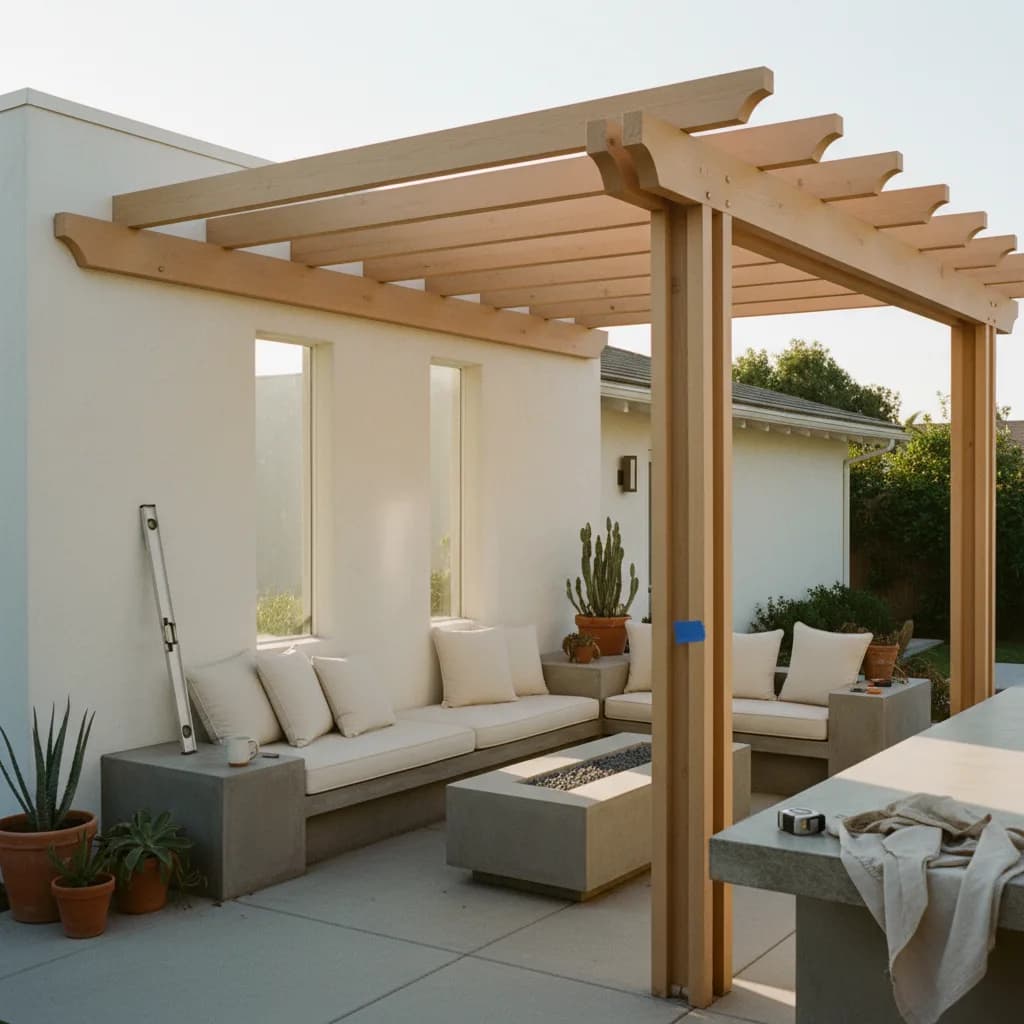
A custom pergola project in Santa Monica, from first design meeting to final inspection sign-off, realistically takes between eight and sixteen weeks. The timeline can start lower, closer to six weeks, for a simple pre-fabricated kit installed on an existing patio. For homeowners in the Ocean Park or Sunset Park neighborhoods, the single biggest delay isn't construction, it's the permit review process, especially if your property falls within the jurisdiction of the California Coastal Commission. The physical build is often the fastest part; the paperwork is what tests your patience.
In a Nutshell
- Total Project Timeline: 8 to 16 weeks
- The Four Phases: Design and Permits, Site Prep and Foundation, Construction, and Finishes and Final Inspection.
- Biggest Delay Risk: Plan check and permit issuance from Santa Monica's Planning and Community Development Department, with potential for extended review by the California Coastal Commission.
- Budget Contingency: Plan for a 10-15% contingency fund. For a $35,000 pergola, that’s an extra $3,500 to $5,250 set aside for surprises like footing modifications or electrical upgrades.
Phase 1: Design and Permits (Weeks 1, 6)
This initial phase is entirely about planning and paperwork, and it's the most unpredictable part of the schedule. Your contractor or designer will produce structural plans and site maps. These aren't just sketches; they are engineered documents that must account for Santa Monica's specific requirements. Because it's a coastal city, pergolas need wind-load engineering for a 110 mph design wind speed, a higher standard than inland areas. Once submitted to the Santa Monica Planning and Community Development Department, the plans enter a queue for review. If your home is in the designated coastal zone, a secondary review by the California Coastal Commission is often required, which can add weeks or even months to this phase alone.
- What Happens: Concept design, structural engineering, site plan creation, permit application submission.
- Who Does What: A designer or architect creates plans. Your licensed general contractor or a permit expediter submits the package to the city.
- Common Holdups: Requests for correction from plan checkers, delays in structural engineering calculations, and the multi-layered review process of the Coastal Commission.
Phase 2: Site Prep and Foundation (Weeks 7, 8)
Once you have an approved permit in hand, physical work can begin. This phase prepares the ground for the structure. It may involve minor demolition of an old patio cover, clearing landscaping, and precise grading. The most critical task is excavating and pouring the concrete footings that will anchor the pergola posts. This is the first point of inspection. A city inspector must verify the footing depth, width, and steel rebar placement before any concrete is poured. This is also when utility trenches for electrical or gas lines are dug. Homeowners often forget to budget for this scope. If you're adding an outdoor kitchen under your new pergola with a Lynx 36-inch Sedona built-in grill, the gas line upsize from 1/2 inch to 3/4 inch is rarely in the first quote. You should budget another $1,500 to $2,500 if your meter doesn't support the extra BTU load.
- What Happens: Site clearing, grading, utility trenching, digging and pouring concrete foundations.
- Who Does What: The contractor's crew handles demolition and excavation. A concrete subcontractor pours the footings. An inspector from the city signs off on the footing forms.
- Common Holdups: Discovering unexpected underground utilities, poor soil requiring deeper or wider footings, or a failed footing inspection requiring rework.
Phase 3: Construction (Weeks 9, 12)
Ready to compare vetted project options?
Use Project Match privately when your scope is clear enough for contractor conversations.
Start Project MatchWith a solid foundation cured and signed off, the pergola itself starts to take shape. This is the most visually dramatic phase. The contractor’s crew will install the posts, beams, and rafters, methodically assembling the main structure. The material choice dictates the pace. A pre-fabricated aluminum kit from a brand like StruXure goes up quickly, while a custom-milled Western Red Cedar structure requires more cutting and fitting on site. If your design includes electrical, an electrician will run conduit and install boxes for lights, ceiling fans, or infrared heaters before the final finishes are applied. This phase concludes with a framing inspection, where the inspector verifies that the structure's connections, lumber dimensions, and overall build match the approved engineering plans. This is a critical milestone before any final finishes can be applied.
- What Happens: Posts are set, beams and rafters are installed, and the main structure is assembled. Electrical and gas lines are run.
- Who Does What: Carpenters or specialized installers erect the structure. An electrician performs the rough-in wiring.
- Common Holdups: Delays in material delivery, weather interruptions, or failing the framing inspection due to deviations from the plan.
Phase 4: Finishes and Final Inspection (Weeks 13, 14)
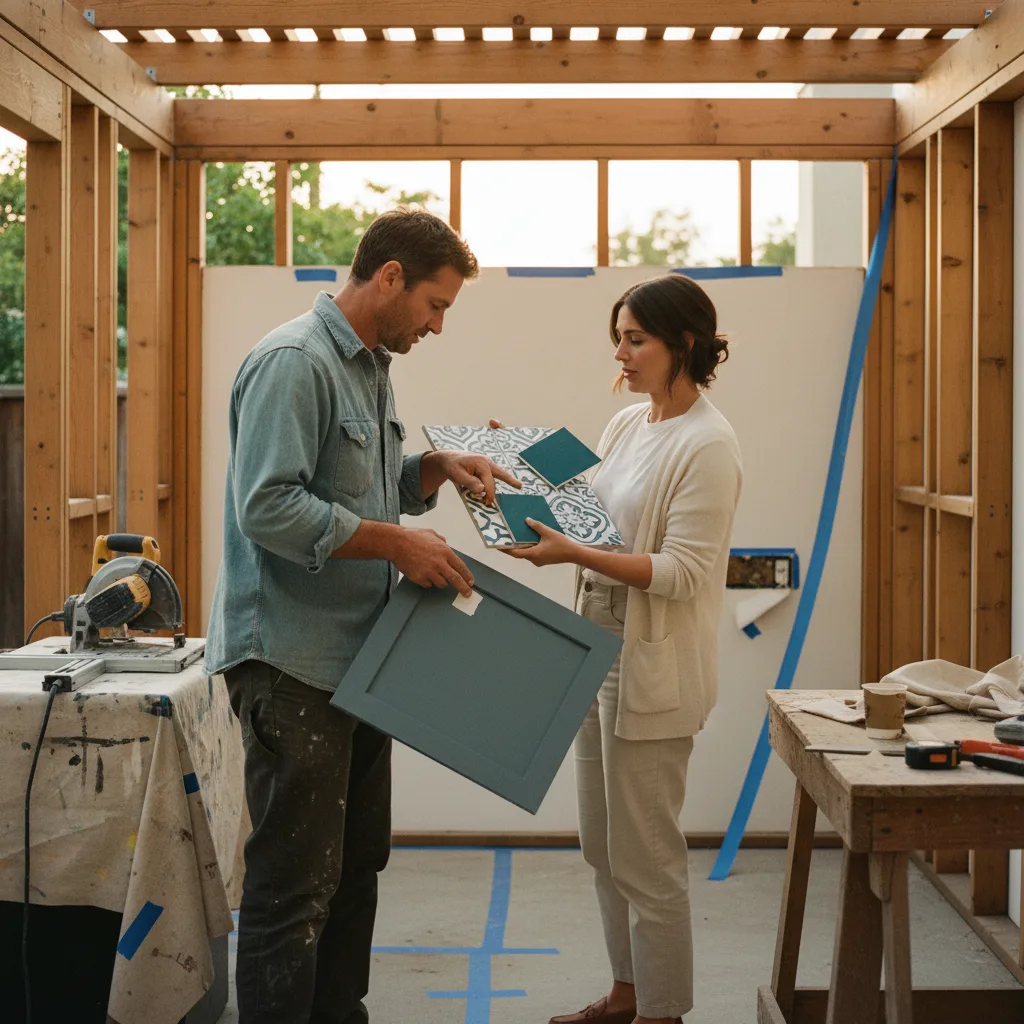
The final phase is about details and approvals. The raw structure is transformed with paint or stain, which protects the wood and provides the desired aesthetic. Electricians return to install the final fixtures: recessed lighting, a ceiling fan, or outdoor-rated outlets. Any additional features like privacy screens, motorized louvers, or decorative hardware are added now. The last step before you can officially enjoy your new space is the final inspection. The city inspector returns to verify that all electrical and structural work is completed to code and matches the permit. They check GFCI outlets, fixture installations, and the overall safety of the structure. Once this inspection is passed, the permit is closed, and the project is officially complete. This final sign-off is the formal end of the construction journey.
- What Happens: Painting or staining, installation of electrical fixtures, attachment of any accessories.
- Who Does What: Painters, electricians, and the contractor's finishing crew.
- Common Holdups: Scheduling the final inspector, failing the final inspection over a minor detail (like a missing outlet cover), and subsequent rework.
Three Representative Projects from 2026
Three representative California projects from 2026, scoped similarly, reconstructed from Golden Yards Magazine's invoiced project network and presented here in aggregate form:
- North of Montana, Santa Monica: A 20-foot by 22-foot Western Red Cedar pergola attached to the home, requiring significant structural engineering. Scope included two Infratech electric heaters and a full lighting package. Total cost: $48,500. Total time: 16 weeks, with five weeks spent in Coastal Commission plan review.
- Sunset Park, Santa Monica: A freestanding 14-foot by 18-foot powder-coated aluminum pergola from Cardinal Architectural on a new concrete slab. The project featured motorized, louvered roofing for adjustable sun and rain protection. Total cost: $36,000. Total time: 11 weeks.
- Mid-City, Santa Monica: A standard 12-foot by 12-foot Douglas Fir pergola built from a pre-designed plan to simplify permitting. The structure was installed on existing concrete footings from a previous structure, saving time on site prep. Total cost: $21,000. Total time: 9 weeks.
What Can Compress This Timeline
While some delays are unavoidable, homeowners have agency over a few key areas. First, select a pre-engineered pergola system. Brands like Toja Grid or StruXure provide their own engineering documents, which can significantly speed up the plan check process with the city. Second, finalize every single design decision before the contract is signed. This means picking the exact stain color, light fixtures, and fan model upfront to prevent mid-project change orders, which are notorious timeline killers. Third, hire a pergola contractor in Santa Monica who has a deep, proven track record with the local building department. An experienced contractor anticipates the city's questions and submits a more complete permit package from the start, avoiding weeks of back-and-forth corrections.
What Blows It Up
Three things consistently derail pergola timelines. The most common is making design changes after the permit is issued. Deciding to make the pergola two feet wider or adding an unplanned electrical circuit requires a plan revision and resubmission to the city, sending you back to the start of the permitting phase. The second major risk is discovering unforeseen site conditions, like hitting a sewer line during footing excavation or finding the soil is too unstable, requiring a new engineering solution. Finally, disagreements with neighbors over property lines or views can lead to formal disputes that halt work. The National Association of Home Builders recommends a ten to fifteen percent contingency on renovations in homes over thirty years old to cover these kinds of surprises.
What Should Be in Your Contractor's Schedule
A professional contractor's proposal should include a detailed, week-by-week schedule with clear milestones. This isn't just a list of tasks; it's a roadmap for the project. Insist on seeing these items before you sign a contract. You can cross-reference these milestones against our Pergola Permit Playbook for Santa Monica in 2026 to ensure nothing is missed. Your schedule should include:
- Architectural and Engineering Plan Completion
- Permit Application Submission Date
- Permit Issuance Date (Target)
- Material Ordering and Delivery Window
- Site Prep and Footing Excavation
- Footing Inspection Date
- Main Structure Framing and Assembly
- Electrical and/or Gas Rough-in
- Framing Inspection Date
- Painting, Staining, and Finishes
- Final Fixture Installation
- Final Inspection Date
Golden Yards Take
The marketing for pergola kits and contractors often sells a dream of a weekend transformation. The reality, especially in a heavily regulated coastal city like Santa Monica, is that the project timeline is 80% administration and 20% construction. A pergola that takes two weeks to physically build can easily require ten weeks of preceding paperwork, inspections, and coordination. The pergola santa monica cost is influenced not just by lumber and labor, but by the soft costs of engineering, permit fees, and the professional expertise required to get a project approved. The premium for a pergola in Santa Monica in 2026 is for the contractor who can skillfully manage the city's process, not just the one who can assemble the structure the fastest. Acknowledge this upfront, and you'll be better prepared for the journey.
Frequently Asked Questions
How long does a pergola in Santa Monica really take?
A typical custom pergola project in Santa Monica takes 8 to 16 weeks from the initial design to the final approved inspection. Simple, pre-fabricated kits on an existing foundation can be faster, around 6 to 8 weeks, while complex designs requiring extensive engineering or Coastal Commission review can extend beyond 16 weeks.
The timeline is dominated by the pre-construction phase. Design, engineering, and permitting can easily consume 4 to 6 weeks or more. The physical construction, including site prep, building, and finishes, is often completed in the following 4 to 8 weeks. The biggest variable is always the city's plan review and inspection schedule, which is outside of your or your contractor's direct control.
Can I use my yard during the pergola construction?
You can use parts of your yard, but the immediate construction zone will be off-limits for safety. The contractor will need a clear area for material storage, cutting, and assembly. Expect noise, dust, and workers present during business hours. Access to the work area must remain unobstructed.
For a typical project, an area of about 15 by 20 feet around the pergola footprint should be considered a hard-hat zone. It's wise to protect nearby plants with tarps and move outdoor furniture to a safe location. Communication with your project manager is key; they can give you daily updates on which areas are safe to access after the workday is over.
What's the longest single phase of a pergola build?
The longest and most variable phase is consistently Phase 1: Design and Permits. This stage can take anywhere from three weeks to several months in Santa Monica. While the actual construction might only take a few weeks, the process of creating engineered plans and navigating the city's building department review is where timelines get stretched.
In Santa Monica, this is often compounded by the California Coastal Commission (CCC) if your property falls within its jurisdiction. The CCC review runs concurrently with or after the city's review and adds another layer of scrutiny and potential delay. A simple request for more information from either body can add weeks to the schedule.
Can I fast-track the permits for a pergola in Santa Monica?
There is no formal process to pay for expedited review for a small residential project like a pergola in Santa Monica. The fastest way to get a permit is to submit a perfect application. This means hiring a designer and contractor who have extensive experience with the city's specific codes and submission requirements.
A complete, well-documented plan set that anticipates a plan checker's questions is less likely to receive corrections, which are a primary source of delay. Using a pre-approved, pre-engineered pergola system can also help, as the structural plans are already complete and standardized. However, you are still subject to the same review queue as every other applicant.
Sources & Methodology
Golden Yards reviews public permit and code signals, material pricing, climate and site constraints, contractor quote patterns, comparable projects, the Golden Yards Cost Index, and the Golden Yards Methodology. Cost references are planning ranges, not fixed bids.
- City of Santa Monica, Planning and Community Development Department, Building & Safety Division
- California Coastal Commission, Permit Application Guidelines
- California Department of Industrial Relations, Prevailing Wage Data for Los Angeles County, 2026
- National Association of Home Builders (NAHB), Remodeling Market Index, Q1 2026
- American Wood Council, "Design for Code Acceptance 7: Wood Decks," 2024
- Western Red Cedar Lumber Association, "Pergola Construction Guide," 2025
- SoCalGas, "Residential Gas Service Guidebook," 2026
Ready to start your pergola project?
Find My ProsFrequently Asked Questions
How long does a pergola in Santa Monica really take?
<p>A typical custom pergola project in Santa Monica takes 8 to 16 weeks from the initial design to the final approved inspection. Simple, pre-fabricated kits on an existing foundation can be faster, around 6 to 8 weeks, while complex designs requiring extensive engineering or Coastal Commission review can extend beyond 16 weeks.</p><p>The timeline is dominated by the pre-construction phase. Design, engineering, and permitting can easily consume 4 to 6 weeks or more. The physical construction, including site prep, building, and finishes, is often completed in the following 4 to 8 weeks. The biggest variable is always the city's plan review and inspection schedule, which is outside of your or your contractor's direct control.</p>
Can I use my yard during the pergola construction?
<p>You can use parts of your yard, but the immediate construction zone will be off-limits for safety. The contractor will need a clear area for material storage, cutting, and assembly. Expect noise, dust, and workers present during business hours. Access to the work area must remain unobstructed.</p><p>For a typical project, an area of about 15 by 20 feet around the pergola footprint should be considered a hard-hat zone. It's wise to protect nearby plants with tarps and move outdoor furniture to a safe location. Communication with your project manager is key; they can give you daily updates on which areas are safe to access after the workday is over.</p>
What's the longest single phase of a pergola build?
<p>The longest and most variable phase is consistently Phase 1: Design and Permits. This stage can take anywhere from three weeks to several months in Santa Monica. While the actual construction might only take a few weeks, the process of creating engineered plans and navigating the city's building department review is where timelines get stretched.</p><p>In Santa Monica, this is often compounded by the California Coastal Commission (CCC) if your property falls within its jurisdiction. The CCC review runs concurrently with or after the city's review and adds another layer of scrutiny and potential delay. A simple request for more information from either body can add weeks to the schedule.</p>
Can I fast-track the permits for a pergola in Santa Monica?
<p>There is no formal process to pay for expedited review for a small residential project like a pergola in Santa Monica. The fastest way to get a permit is to submit a perfect application. This means hiring a designer and contractor who have extensive experience with the city's specific codes and submission requirements.</p><p>A complete, well-documented plan set that anticipates a plan checker's questions is less likely to receive corrections, which are a primary source of delay. Using a pre-approved, pre-engineered pergola system can also help, as the structural plans are already complete and standardized. However, you are still subject to the same review queue as every other applicant.</p>