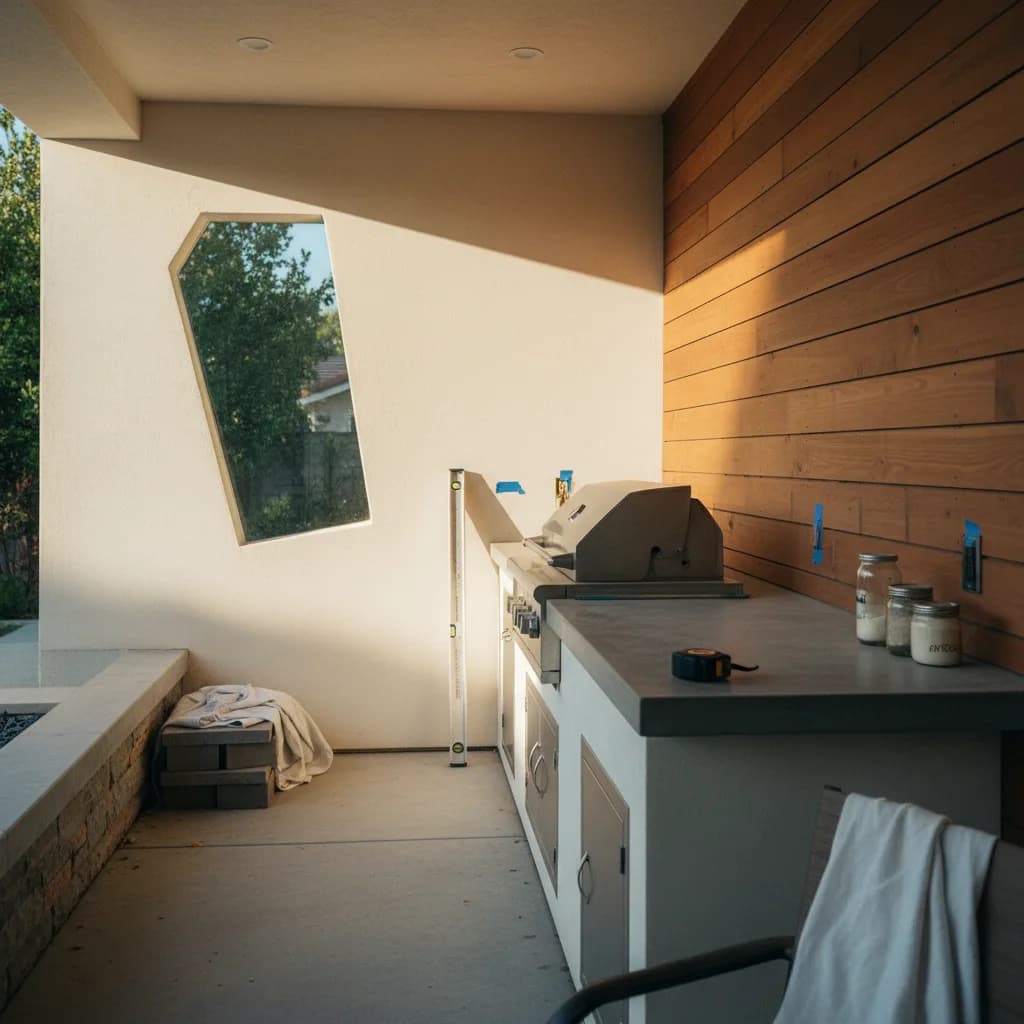
Building an outdoor kitchen in Orange County is less about adding a grill and more about creating a complete, secondary living space. But the gap between a functional cooking station and a true outdoor great room is vast, both in scope and budget. While a simple built-in grill setup can start lower, particularly for condo patios or simple refreshes, a fully-featured project involves costs homeowners rarely see coming, from utility upgrades to structural engineering for coastal wind loads.
This comparison breaks down the real-world costs and considerations for two distinct project tiers in Orange County for 2026: a well-appointed Mid-Tier kitchen and a no-compromise Premium installation. We’ll look at appliances, materials, and the hidden infrastructure costs that define the final price tag.
In a Nutshell: Mid-Tier vs. Premium
- Budget: A mid-tier outdoor kitchen typically lands between $22,000 and $45,000. A premium, custom-built kitchen starts around $75,000 and can easily exceed $150,000 with integrated structures and high-end appliances.
- Appliances: Mid-tier relies on quality pro-sumer brands like Lynx Sedona or Blaze. Premium projects feature top-tier brands like Kalamazoo or Hestan, often with specialized components like charcoal smokers or pizza ovens.
- Structure: Mid-tier often uses prefabricated island modules or metal stud framing with a stucco finish. Premium builds involve custom masonry, poured-in-place concrete countertops, and premium materials like Ipe wood or Dekton cladding.
- Utilities: Mid-tier setups might include a cold-water sink and tap into existing electrical circuits. Premium kitchens demand dedicated gas lines, hot and cold water, drainage tied into the sewer line, and a new electrical subpanel to handle refrigerators, lighting, and outlets.
- Permitting: Simple mid-tier islands may not require a permit, but any new gas or electrical work will. Premium projects with permanent structures and full utility hookups always require a full plan review and permitting from your local city, like Irvine or Newport Beach.
The Bottom Line Up Front: Budget
An Orange County outdoor kitchen cost is a story told in three parts: the structure, the appliances, and the utilities. For a mid-tier project, the budget often breaks down like this: the prefabricated island or frame is $8,000. The appliance package, including a grill, side burner, and fridge, adds another $12,000. The utility hookups, countertops, and finish work contribute a final $10,000 to $15,000.
For a premium installation, the numbers scale significantly. The custom masonry structure, foundation, and premium countertops are $35,000. The appliance suite, featuring a brand like Kalamazoo with refrigeration and a power burner, can be $40,000 or more. The infrastructure, including a new subpanel, a larger gas line, full plumbing, and an integrated pergola, easily adds another $30,000 to $60,000.
Why is an Outdoor Kitchen More Expensive in Orange County?
The premium attached to an Orange County outdoor kitchen comes from three main sources: labor, materials, and regulation. Skilled labor is the primary driver. According to the California Department of Industrial Relations prevailing wage data for Orange County, licensed plumbers, electricians, and masons command top-tier rates. Finding a qualified outdoor kitchen contractor in Orange County who can manage all these trades is a specialized skill.
Material costs are also higher. Proximity to the coast in cities like Newport Beach and Laguna Beach demands the use of 316 marine-grade stainless steel for appliances and hardware to resist corrosion from salt air, a significant upcharge. Finally, local building codes and permitting processes, especially in planned communities like Irvine, add administrative overhead and inspection requirements that increase the project's soft costs.
Representative Orange County Projects from 2026
Ready to compare vetted project options?
Use Project Match privately when your scope is clear enough for contractor conversations.
Start Project MatchThree representative projects from 2026, scoped similarly, reconstructed from Golden Yards Magazine's Project of the Day network and used here in aggregate form:
- Irvine, Mid-Tier Refresh ($38,500): A homeowner replaced an old, failing grill island with a new L-shaped configuration using a prefab system. The project included a 36-inch Blaze Professional grill, an outdoor-rated refrigerator, and new quartzite countertops. The existing gas and electrical lines were sufficient, avoiding major utility work.
- Laguna Niguel, Custom Mid-Tier+ ($62,000): This project involved a new 12-foot linear island built with steel framing and a smooth stucco finish. It featured a Lynx Sedona 36-inch grill, a double side burner, and under-counter drawers. The budget included a new gas line extension and a concrete patio slab to support the island.
- Newport Beach, Premium Entertainer's Kitchen ($125,000): A full backyard renovation centered on a U-shaped kitchen with bar seating. The appliance suite was from Hestan, including a grill, power burner, and pizza oven. The structure was custom masonry with Dekton countertops, an Ipe wood bar top, a sink with hot water, and a new attached pergola requiring engineering for coastal wind loads.
Comparison: Premium vs. Mid-Tier Outdoor Kitchen
The choice between mid-tier and premium isn't just about the final check you write. It's about performance, longevity, and the type of outdoor living you want to enable. Here’s how they stack up across six key dimensions.
Appliances & Components
Mid-Tier: Focuses on reliable, high-performance brands that offer excellent value. A typical setup includes a Lynx 36-inch Sedona built-in grill, a Blaze double side burner, and a U-Line or Zephyr outdoor refrigerator. These are workhorse products made from 304 stainless steel, perfectly suitable for most of Orange County.
Premium: This tier is about specialized cooking and ultimate durability. You’ll find a Kalamazoo K750 Hybrid Fire Grill that can cook with gas, wood, or charcoal. It's paired with Twin Eagles power burners for wok cooking, Perlick refrigerator drawers for zoned cooling, and potentially a Hestan pizza oven. All components are 316 marine-grade stainless steel for maximum corrosion resistance, a must-have for homes in Corona del Mar or on Balboa Island.
Structure & Materials
Mid-Tier: Efficiency is key. Many projects use prefabricated galvanized steel frames or even ready-to-finish modular islands. Finishes are typically durable and attractive, like a smooth stucco base and granite or quartzite countertops. These materials offer a great balance of cost, aesthetics, and weather resistance.
Premium: The structure is a piece of custom architecture. This means a poured concrete foundation, concrete block (CMU) construction, and high-end finishes. Countertops are often large-format porcelain slabs from a brand like Dekton, which are impervious to staining and UV rays. Accents might include Ipe wood panels or custom powder-coated steel elements.
Utilities & Infrastructure
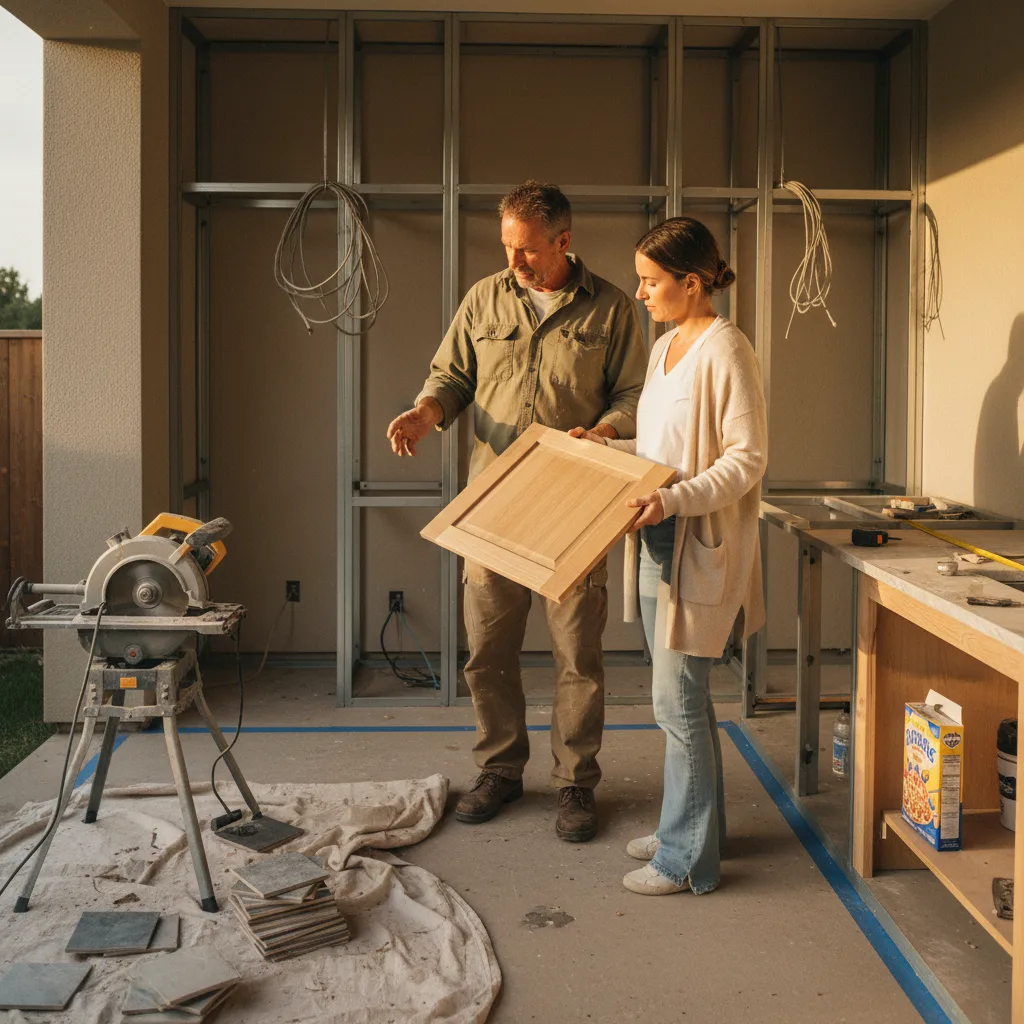
Mid-Tier: The goal is to connect to existing services where possible. This often means a simple cold-water line run to a sink with a gravity drain (a dry well), a new 1/2-inch gas line tee'd off an existing meter, and power from a nearby GFCI outlet. It's functional but limited.
Premium: This involves creating entirely new, dedicated infrastructure. A licensed plumber will run hot and cold PEX lines and a drain tied directly to the home's sewer system. The gas line upsize from 1/2 inch to 3/4 inch is rarely in the first quote, budget another $1,200 to $2,400 if your meter doesn't support the BTU load. A new 60-amp subpanel is installed by an electrician to power the fridge, rotisserie, lighting, and outlets without tripping breakers in the main house.
Layout & Features
Mid-Tier: Layouts are typically linear or L-shaped to maximize counter space in a compact footprint. Features are focused on the core cooking experience: ample prep space next to the grill, storage for tools, and perhaps a cutout for a trash bin.
Premium: The kitchen is designed with zones for cooking, prepping, serving, and socializing. This includes bar-height seating, a dedicated sink and beverage station with an ice maker, and specific task lighting for each area. The layout is integrated with the larger landscape design, often flowing into a dining area or lounge under a permanent pergola.
Permitting & Compliance
Mid-Tier: If you're using a movable, prefabricated island with no permanent utility connections, you may not need a permit. However, the moment you run a new gas line or dedicated electrical circuit, a permit is required by the city. An experienced outdoor kitchen contractor in Orange County will handle this process.
Premium: A permit is non-negotiable. The plans will undergo a full review by the local building department. This includes structural plans for any overhead structures, which in coastal areas need wind-load engineering for 110 mph design wind speed. The project will also be subject to MWELO (Model Water Efficient Landscape Ordinance) compliance, requiring a drought-tolerant plant palette and efficient irrigation in the surrounding landscape disturbed by construction.
Longevity & Maintenance
Mid-Tier: With regular cleaning and covering, a mid-tier kitchen with 304 stainless appliances will provide 10-15 years of service. Stucco finishes may need repainting every five to seven years, and grout on tile countertops will require periodic sealing to prevent staining.
Premium: Built with marine-grade steel and ultra-durable materials like Dekton, a premium kitchen is designed to last 20 years or more, even in harsh coastal environments. The maintenance is lower, as the materials are less porous and more resistant to the elements. The higher initial investment pays off in reduced upkeep over the life of the kitchen.
Hidden Costs & Scope Creep
The most common budget surprises aren't the appliances, they are the site work and infrastructure. The gas line upsize for a high-BTU grill is a classic example. Another is the electrical subpanel, which can cost $2,500 to $4,000 once you factor in the panel, breakers, and conduit run from the main service. Drainage is another sleeper cost; connecting to a sewer line can be thousands more than a simple dry well.
Before you sign a contract, confirm these items are explicitly included. For a detailed breakdown of the permitting process and required inspections, see our [Orange County outdoor kitchen permit playbook for 2026](/guides/orange-county-outdoor-kitchen-permit-playbook-2026). The National Association of Home Builders recommends a ten to fifteen percent contingency on renovations in homes over thirty years old. Given the complexities of outdoor construction, this is wise advice.
The Golden Yards Magazine Take
Homeowners planning an outdoor kitchen often fixate on the grill, using it as the primary anchor for their budget. This is a mistake. The real cost drivers are what we call the “three U’s”: Utilities (gas, electric, water), Understructure (the foundation and island framing), and Under-roof (pergolas or other shade structures). These elements can easily represent seventy percent of the total project cost before you’ve even selected an appliance. The shiny grill is the final, celebratory purchase, not the starting point. By budgeting for the infrastructure first, you create a realistic financial plan and avoid the mid-project sticker shock that plagues so many outdoor renovations. The best outdoor kitchen contractor in Orange County will lead with these items, not hide them.
Frequently Asked Questions
How much does a basic outdoor kitchen cost in Orange County?
A basic, professionally installed outdoor kitchen in Orange County starts around $15,000 in 2026. This typically includes a simple linear island, a mid-range built-in grill like a Napoleon or Bull, under-counter access doors, and a durable tile countertop. Utility connections are usually minimal at this price point.
This entry-level cost assumes you have an existing concrete or paver patio to build on and that gas and electrical stubs are nearby. Costs increase quickly if a new foundation, long utility trenches, or significant hardscaping is required. Prefabricated modules can sometimes keep costs down, but custom-built steel stud framing is more common for longevity.
Do I need a permit for an outdoor kitchen in Orange County?
You likely need a permit if your outdoor kitchen involves new gas lines, electrical wiring, or plumbing. Any permanent overhead structure, like a pergola bolted to a foundation, will also require a permit from your local city’s building department, whether it's in Anaheim or San Clemente.
Small, self-contained prefabricated islands that plug into an existing outlet and use a propane tank may not require a permit. However, it is always best to check with your local jurisdiction. A qualified contractor will know the specific requirements and can manage the permitting process, which is essential for ensuring the work is safe, up to code, and properly insured.
What's the best countertop material for an OC outdoor kitchen?
The best countertop material balances durability, heat resistance, and stain resistance. For most Orange County homes, quartzite and Dekton (an ultra-compact surface) are top choices. They are extremely dense, non-porous, and UV-stable, meaning their color won't fade in the relentless Southern California sun.
While popular, granite needs to be sealed regularly to prevent staining, and darker colors can become dangerously hot in direct sunlight. Poured-in-place concrete offers a modern aesthetic but is prone to hairline cracks and requires diligent sealing. For a balance of performance and value, quartzite is often the recommended starting point.
Is a saltwater pool a problem for an outdoor kitchen?
Yes, proximity to a saltwater pool significantly accelerates corrosion and should influence your material choices. The aerosolized saltwater is nearly as corrosive as being on the coast. For kitchens within 20 feet of a saltwater pool, upgrading to 316 marine-grade stainless steel for all appliances, doors, and hardware is critical.
While more expensive, 316-grade steel contains molybdenum, which provides superior resistance to chloride corrosion compared to the standard 304-grade stainless steel used in many outdoor products. Also consider powder-coated finishes for cabinets and non-porous countertops like Dekton to minimize areas where salt can settle and cause damage.
How can I save money on an outdoor kitchen project?
The most effective way to save money is by simplifying your utility needs. Opting for a propane-fueled grill instead of running a natural gas line, omitting a sink to avoid plumbing costs, and using high-quality freestanding appliances instead of a built-in configuration can cut project costs by 30-50%.
Another strategy is to phase the project. Start with the patio and a foundational island with the grill. Then, in a future phase, you can add a refrigerator, side burner, or other amenities as your budget allows. Choosing a prefabricated island system over a custom-built masonry structure will also offer significant upfront savings.
Sources & Methodology
See the Golden Yards Methodology for how sources are reviewed, ranges are normalized, and planning-data limits are handled.
Cost ranges in this guide draw on the following named industry sources, public agency datasets, and Golden Yards Magazine editorial research.
- California Department of Industrial Relations, Prevailing Wage Determinations (2026)
- National Association of Home Builders (NAHB) Home Building Geography Index (Q1 2026)
- Harth Builders 2026 Cost vs. Value Report, Outdoor Living (2026)
- Kalamazoo Outdoor Gourmet Professional Pricing Guide (2026)
- Lynx Grills, Sedona Series vs. Professional Series Specifications (2025)
- California Model Water Efficient Landscape Ordinance (MWELO) Compliance Guide (2025)
Ready to start your outdoor kitchen project?
Find My ProsFrequently Asked Questions
How much does a basic outdoor kitchen cost in Orange County?
A basic, professionally installed outdoor kitchen in Orange County starts around $15,000 in 2026. This price typically includes a simple linear island, a mid-range built-in grill like a Napoleon or Bull, access doors, and a tile countertop. This assumes an existing patio and that utility connections are already nearby.
The $15,000 entry-level cost is contingent on having an existing concrete or paver patio to build upon, with gas and electrical stubs located close to the site. Costs will increase significantly if the project requires a new foundation, long utility trenches, or other major hardscaping. While prefabricated modules can sometimes keep costs down, custom-built steel stud framing is more common for longevity. This base price covers minimal utility connection work for the island, grill, and doors.
Do I need a permit for an outdoor kitchen in Orange County?
Yes, you likely need a permit for an outdoor kitchen in Orange County if it involves new gas lines, electrical wiring, or plumbing. Permanent overhead structures, like a pergola bolted to a foundation in Anaheim or San Clemente, also require a permit. Small, prefabricated islands using propane and an existing outlet may not.
It is always best to check with your local jurisdiction's building department. A permit is necessary for projects with new utility lines or permanent structures to ensure the work is safe, up to code, and properly insured. While a small, self-contained prefabricated island that plugs into an existing outlet and uses a propane tank might be exempt, a qualified contractor will know the specific requirements for cities from Anaheim to San Clemente and can manage the permitting process for you.
What's the best countertop material for an OC outdoor kitchen?
For an Orange County outdoor kitchen, the best countertop materials are quartzite and Dekton. They offer an ideal balance of durability, heat resistance, and stain resistance. As dense, non-porous, and UV-stable surfaces, their color will not fade in the Southern California sun. Quartzite is an excellent starting point for performance and value.
While other materials are common, they have specific drawbacks for this region. Granite is a popular choice, but it must be sealed regularly to prevent staining, and its darker colors can become dangerously hot in direct sunlight. Poured-in-place concrete provides a modern aesthetic but is prone to developing hairline cracks and also requires diligent sealing.
Is a saltwater pool a problem for an outdoor kitchen?
Yes, proximity to a saltwater pool significantly accelerates corrosion. The aerosolized saltwater is nearly as corrosive as coastal air. For kitchens within 20 feet of a pool, upgrading appliances and hardware to 316 marine-grade stainless steel is critical. This grade offers superior chloride resistance compared to standard 304-grade steel.
The superior resistance of 316-grade steel comes from its molybdenum content, which specifically combats the chloride corrosion caused by saltwater. Standard 304-grade stainless steel, used in many outdoor products, lacks this protection and will degrade much faster. To further protect your kitchen, consider powder-coated finishes for cabinets and non-porous countertops like Dekton. These materials minimize surfaces where salt can settle and cause damage.
How can I save money on an outdoor kitchen project?
Save money on an outdoor kitchen by simplifying utility needs, which can cut costs by 30-50%. Opt for a propane grill instead of a natural gas line, omit the sink to avoid plumbing, and use freestanding appliances over a built-in configuration. Phasing the project or choosing a prefabricated island also works.
The most significant savings, between 30-50%, come from avoiding complex utility installations. Running a natural gas line for a grill and plumbing for a sink are major expenses. By choosing a propane-fueled grill and forgoing a sink, you eliminate these costs. High-quality freestanding appliances also offer flexibility without the expense of a custom built-in setup.
You can also manage costs by phasing the project. Begin with the essentials, like the patio and a foundational island for the grill. In a later phase, you can add a refrigerator, side burner, or other amenities when your budget allows. A prefabricated island system is another great option for considerable upfront savings compared to a custom-built masonry structure.